Taurine: The Multifunctional Amino Acid Supporting Sleep, Stress Resilience & Healthy Ageing

For many women today, fatigue is no longer simply about needing more sleep.
It is often the result of an overwhelmed nervous system, chronic stress, emotional load and the constant demands of modern life. The body may feel exhausted, yet the mind remains alert. Sleep becomes lighter, recovery feels incomplete and resilience gradually begins to decline.
Many women describe feeling simultaneously tired and wired. They long for deeper rest, greater emotional balance and the ability to wake feeling genuinely restored rather than simply functioning. As conversations around nervous system health, longevity and restorative wellbeing continue to evolve, one nutrient is quietly emerging as an important piece of the puzzle: taurine.
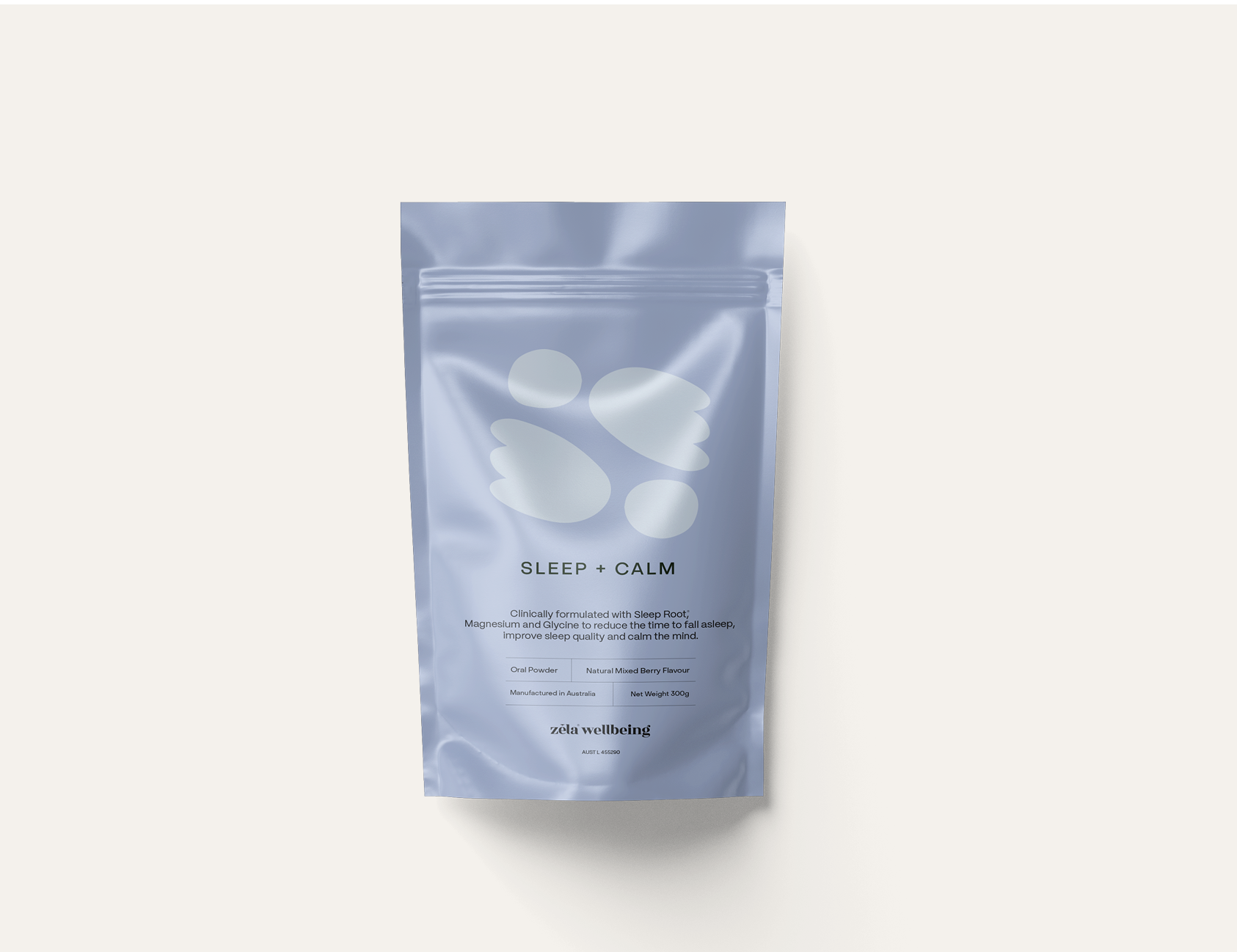
A key ingredient in Zela Wellbeing's Sleep+Calm formula, taurine is a naturally occurring amino acid found throughout the brain, nervous system, muscles and eyes. While it is often associated with energy drinks, its true physiological importance extends far beyond energy alone. Today, growing research is revealing taurine's remarkable role in supporting restorative sleep, nervous system regulation, cognitive function and healthy ageing.
An Essential Nutrient Hidden in Plain Sight
Taurine is one of the most abundant amino acids in the human body.
Unlike many amino acids, taurine is not primarily used to build proteins. Instead, it functions as a regulatory nutrient, helping cells maintain balance, communicate effectively and adapt to changing physiological demands.
Taurine is particularly concentrated in tissues with high energy requirements, including the brain, nervous system and skeletal muscle. Researchers have identified its involvement in a wide range of biological processes, including sleep regulation, neuronal communication, mitochondrial function, neuroplasticity and cellular resilience.
Its influence extends across multiple systems, making taurine less of a single-purpose nutrient and more of a foundational contributor to overall wellbeing.
The Modern Nervous System Under Constant Pressure
To understand why taurine is attracting so much interest, it is important to understand the challenges facing the modern nervous system.
Today's environment places extraordinary demands on our physiological capacity for recovery.
• Chronic stress and emotional overload
• Constant digital stimulation
• Cognitive overload and mental multitasking
• Poor sleep and insufficient recovery
• Always-on connectivity and modern lifestyle demands
Over time, these pressures can keep the nervous system in a prolonged state of alertness.
Even when the body feels exhausted, the brain may struggle to fully switch off. This can make it harder to fall asleep, stay asleep and achieve the deeper stages of restorative sleep that support overnight recovery.
This may appear as:
• Difficulty falling asleep
• Racing thoughts at night
• Waking during the night
• Light or fragmented sleep
• Feeling "tired but wired"
• Waking unrefreshed despite adequate sleep
Supporting sleep therefore often requires supporting the nervous system itself.
This is where taurine may play an especially valuable role.
Supporting the Body's Natural Sleep Pathways
One of taurine's most compelling benefits is its ability to support healthy sleep and relaxation. Research suggests taurine interacts with both GABA and glycine receptors, two of the nervous system's primary calming neurotransmitter pathways. These pathways help regulate neuronal activity and support the body's ability to transition from alertness into rest. When the nervous system remains overstimulated, sleep can become increasingly difficult regardless of how tired the body feels. By supporting these calming pathways, taurine may help encourage a more relaxed physiological state that is conducive to restorative sleep.
Research has also explored taurine's role in circadian rhythm regulation and pathways involved in melatonin production. Melatonin is the hormone responsible for helping regulate the body's sleep-wake cycle and evening transition into rest.
Importantly, taurine does not appear to function as a heavy sedative. Instead, research suggests it may support the body's natural sleep architecture and relaxation pathways, helping create the conditions required for deeper restoration.
This distinction matters.
Many women today are not necessarily looking for stronger sleep aids. They are looking for better recovery, deeper restoration and a calmer relationship with sleep itself.
Stress Resilience & Nervous System Regulation
Sleep and stress are deeply interconnected. When stress levels remain elevated for prolonged periods, the nervous system can become increasingly reactive, making it harder to relax, recover and maintain emotional balance. Research suggests taurine may help support stress resilience by regulating neurotransmitter activity and helping maintain healthy nervous system function. Studies have also explored taurine's influence on pathways involved in the body's response to physical and emotional stress. Rather than suppressing the nervous system, taurine appears to support the body's own regulatory mechanisms, helping maintain a healthier balance between activation and recovery.
This may help explain why taurine is increasingly being investigated for its role in supporting emotional wellbeing and overall nervous system resilience.
Cognitive Function, Focus & Brain Health
The brain contains some of the highest concentrations of taurine in the body.
This reflects its importance in supporting neuronal communication, healthy brain function and cognitive performance. Research suggests taurine contributes to neuroplasticity, neuronal survival and the formation of healthy neural connections. It also plays a role in maintaining calcium balance within neurons, an important process for healthy neurological function. These functions become increasingly important in the context of modern life, where chronic stress, poor sleep and cognitive overload can all influence mental clarity, memory and focus.
Emerging research continues to explore taurine's role in supporting cognitive wellbeing across the lifespan, highlighting its potential importance for both short-term performance and long-term brain health.
Supporting Energy Where It Begins
When people think about energy, they often think about stimulants. However, true vitality begins much deeper within the cell.
Mitochondria are responsible for producing ATP, the energy currency that powers virtually every biological process in the body. Healthy mitochondrial function is essential for physical energy, cognitive performance and overall wellbeing.
Research suggests taurine plays an important role in supporting mitochondrial health and efficient energy production. By helping maintain healthy cellular energy pathways, taurine supports the body's ability to generate energy naturally and sustainably.
This makes taurine particularly interesting not only for sleep and recovery, but also for supporting daily vitality and resilience.
Taurine & Healthy Ageing
One of the most exciting areas of taurine research relates to healthy ageing. Scientists have observed that taurine levels naturally decline with age. At the same time, taurine appears to support several biological processes that are closely associated with cellular resilience and long-term health.
These include mitochondrial function, protein quality control, neuronal health and cellular homeostasis. Researchers are increasingly focusing not only on lifespan, but also on healthspan, the number of years spent feeling well, energetic and capable.
Taurine's involvement in many of the body's foundational restorative processes has made it an increasingly interesting nutrient within this emerging field of longevity science. While research continues to evolve, taurine's ability to support multiple systems simultaneously positions it as a promising nutrient for healthy ageing and long-term wellbeing.
Why Taurine Matters for Modern Wellbeing
What makes taurine unique is not any single benefit. It is the breadth of its influence across the body's interconnected systems. Sleep, stress resilience, emotional wellbeing, cognitive function and healthy ageing are often discussed as separate areas of health. In reality, they are deeply connected through the nervous system and the body's ability to recover and restore itself. Taurine appears to support many of these pathways simultaneously, helping the body maintain balance amidst the demands of modern life. As research continues to expand, taurine is increasingly being recognised as a foundational nutrient for restoration, resilience and long-term wellbeing.
A More Intelligent Approach to Rest, Recovery & Resilience

At Zela Wellbeing, we believe true wellbeing begins with restoration.
Sleep, stress resilience, emotional wellbeing and long-term health are deeply interconnected through the nervous system. When the body is unable to fully recover, the effects can extend far beyond fatigue, influencing mood, cognitive function, energy production and overall wellbeing.
This is one of the reasons taurine is included in our Sleep+Calm formula. As a key ingredient within the formulation, taurine helps support the body's natural sleep and relaxation pathways while also contributing to nervous system regulation, cognitive wellbeing and cellular restoration. By working alongside complementary ingredients that support calm, restorative sleep and overnight recovery, taurine helps create a more comprehensive approach to evening wellbeing. Because true restoration is not simply about sleeping longer. It is about giving the body and mind the opportunity to recover, replenish and build resilience for the demands of modern life.
References
Jakaria, M., Azam, S., Haque, M. E., Jo, S.-H., Uddin, M. S., Kim, I.-S., & Choi, D.-K. (2019). Taurine and its analogs in neurological disorders: Focus on therapeutic potential and molecular mechanisms. Redox Biology, 24, 101223. https://doi.org/10.1016/j.redox.2019.10122
Lin, F.-J., Chou, K.-J., Huang, Y.-S., & Wang, C.-H. (2010). Effect of taurine and caffeine on sleep–wake activity in Drosophila melanogaster. Journal of Biomedical Science, 17(Suppl. 1), S11. https://doi.org/10.1186/1423-0127-17-S1-S11
Singh, P., Gollapalli, K., Pal, B., Li, H., Tran, T. T. T., Claud, E. C., Melián, N., Chen, Y., Chen, J., & Vijg, J. et al. (2023). Taurine deficiency as a driver of aging. Science, 380(6649), eabn9257. https://doi.org/10.1126/science.abn9257