Give to Gain: Why Women’s Hormone Wellbeing Begins with Caring for Ourselves and Each Other
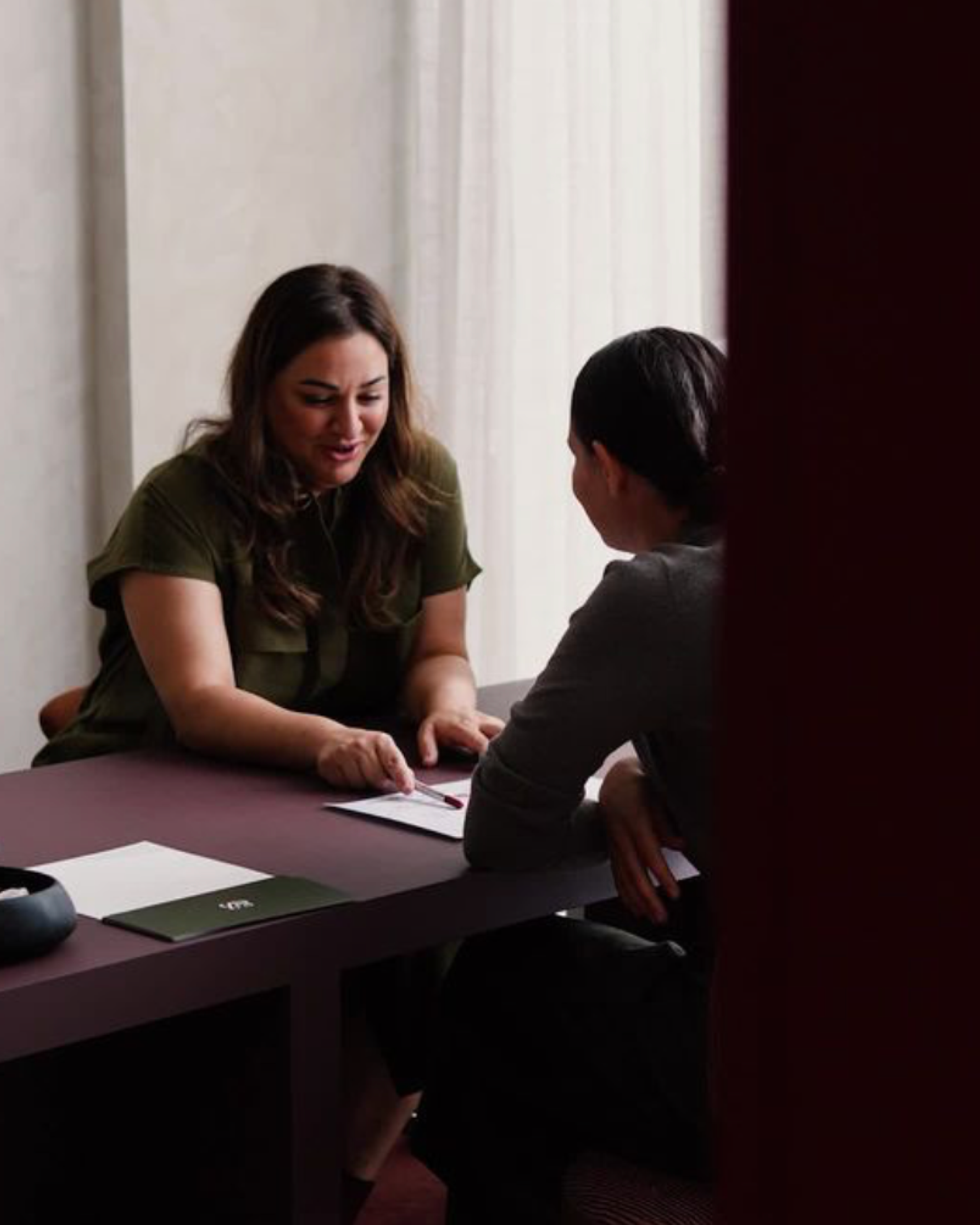
This International Women’s Day, we sit down with Zela Wellbeing founder, women’s health doctor and hormone expert Dr Fatima Khan to reflect on self-care, the invisible load women carry, and how supporting ourselves strengthens women everywhere.

Each year, International Women’s Day invites us to reflect not only on progress, but on the ways women continue to carry, care and contribute, often quietly and without recognition. This year’s theme, Give to Gain, encourages a rethinking of what giving truly means, not as sacrifice or self-depletion, but as reciprocity.
At Zela Wellbeing, this idea sits at the heart of why we exist. We sat down with our founder, Dr Fatima Khan, to talk about women’s hormone wellbeing, the loss of shared wisdom about the female body, and why caring for ourselves is not separate from caring for one another. After years of supporting women navigating hormonal change and feeling unseen within traditional healthcare systems, Dr Khan recognised that many women were not simply searching for solutions. They were searching for understanding, validation and permission to prioritise their own wellbeing.
When you hear the International Women’s Day theme “Give to Gain,” what does it mean to you, personally and professionally?
To me, “Give to Gain” is about recognising that care is not a finite resource. Women are often expected to be natural caregivers, to hold families, workplaces and relationships together, yet we rarely speak about what sustains the person doing the holding.
Personally and professionally, I see that when women are given knowledge, validation and the space to understand their bodies and gain hormone literacy, they gain something profound. They gain agency. They begin to trust themselves again. In medicine, that shift is incredibly powerful because health is not only about treating symptoms. It is about restoring a woman’s sense of ownership over her wellbeing.
“Give to Gain” reminds us that when women are supported properly, everyone benefits, including the woman herself.
What inspired you to create Zela Wellbeing, and what did you hope women would gain through it?
Zela Wellbeing grew from years of listening to women who felt dismissed or misunderstood as they navigated hormonal changes. Many came to consultations feeling exhausted, anxious or disconnected from themselves, yet they often believed they simply needed to cope better.
What I saw was not a lack of resilience, but a loss of accessible knowledge and support. Historically, wisdom about the female body and its rhythms was often passed down through generations. Women learned from mothers, grandmothers and communities how to understand cycles, transitions and change. Much of that shared wisdom has been lost in modern life, leaving many women feeling isolated in experiences that are deeply universal.
I created Zela to help rebuild that bridge between medical science and shared understanding. Zela, meaning lacking nothing, is about finding your own path and recognising that you already have what it takes to thrive. The intention was to create something that supports women not by fixing them, but by helping them reconnect with the intelligence and balance already present within their bodies.
My hope was that women would gain clarity and consistency, but also reassurance. A sense that their experiences are valid, that their bodies are not failing them, and that small, intentional rituals can meaningfully support mood, sleep and hormonal balance.
Women give so much to those around them. How can giving also become a source of strength and renewal for women themselves?
Giving becomes renewing when it is rooted in self-awareness rather than expectation. Many women have learned to give automatically, often without pausing to ask whether they themselves are resourced enough to do so.
From a physiological perspective, chronic stress and emotional labour have real effects on hormonal regulation, sleep and mental clarity. But beyond biology, there is also an emotional dimension. When women feel seen, supported and connected to their own needs, giving shifts from obligation to intention.
I often see that renewal begins when women recognise that caring for themselves is not separate from caring for others. It is what makes sustainable care possible. When a woman’s nervous system is supported and her wellbeing prioritised, she gives from a place of presence and strength rather than depletion. That change is subtle but deeply transformative.
What do you think women need to give themselves permission to receive more of?
I think many women need permission to acknowledge the weight of the invisible load they carry. So much of women’s labour is emotional, cognitive and unseen. The constant organising, anticipating and caring that happens quietly in the background of daily life.
There is often an internal pressure to be everything to everyone, to manage work, relationships, family and personal wellbeing seamlessly. Over time, that expectation becomes internalised, and women begin to measure their worth by how much they can hold without needing support themselves.
Giving themselves permission means recognising that capacity has limits and that carving out time for themselves is not selfish, but necessary. It allows space to reconnect with their own needs, identity and energy. When women release the pressure to perform constant capability, they create room for restoration, creativity and genuine wellbeing.
What do you hope women gain, collectively, if we embrace ‘Give to Gain’ more fully in how we approach health and wellbeing?
At its heart, ‘Give to Gain’ is not about asking women to give more, but about redefining giving to include ourselves. When we are supported to listen to our bodies and honour our needs, the impact extends beyond the individual. Self-care becomes collective care, strengthening how we live, work and support one another as women. This International Women’s Day, caring for ourselves may be one of the most powerful ways that we care for each other.
If you would like to deepen your understanding of hormonal wellbeing as a source of empowerment, we invite you to explore The Hormone Journal, a space created to share education, insight and guidance to support more informed, confident relationships with our bodies.