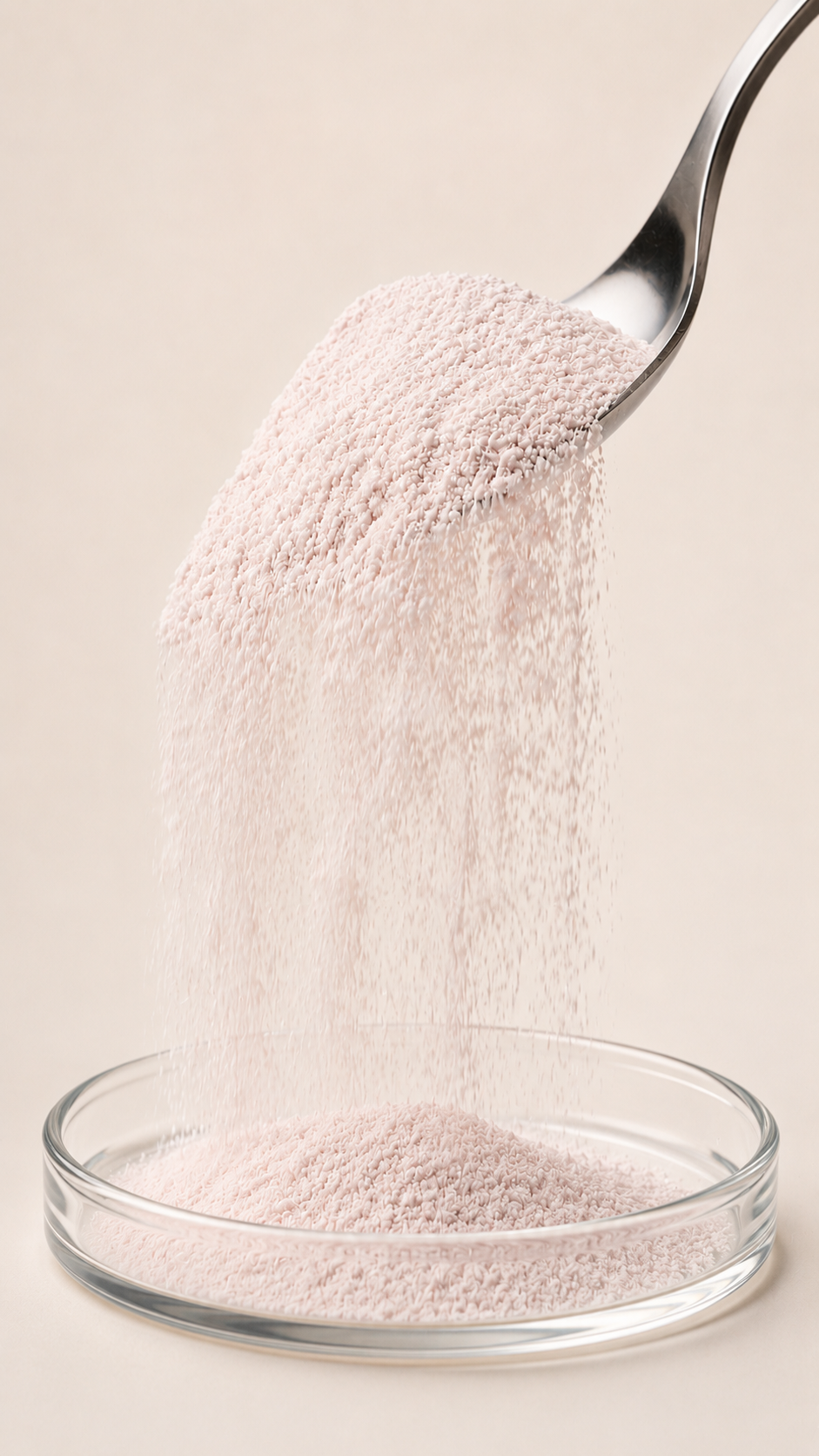
Glycine: The Amino Acid Redefining Restorative Sleep

When people think about nutrients that support sleep, ingredients such as magnesium, melatonin or herbal botanicals often come to mind. Few realise that one of the simplest amino acids found naturally within the body also plays an important role in helping us achieve restorative sleep. Glycine has attracted growing scientific interest for its unique ability to support healthy sleep through multiple biological pathways. Unlike ingredients that promote sedation, glycine works with the body's own physiology by supporting the nervous system, regulating core body temperature and enhancing the quality of restorative sleep. As researchers continue to explore the science of sleep, glycine is emerging as one of the most fascinating ingredients involved in the body's natural overnight recovery.
More Than Just an Amino Acid
Glycine is the smallest and one of the most abundant amino acids in the human body.
It serves as a building block for proteins, collagen and connective tissue, while also playing an essential role within the central nervous system. Unlike many nutrients associated with sleep, glycine is naturally produced by the body and participates in numerous physiological processes that extend far beyond muscle health.
One of its most intriguing roles is as an inhibitory neurotransmitter, helping regulate activity within the brain and spinal cord. Rather than stimulating the nervous system, glycine helps create a state of relaxation that supports the body's natural transition into sleep. This subtle yet important mechanism has made glycine an increasingly popular focus of sleep research.
Calming the Nervous System
Healthy sleep begins with the ability to switch off. Throughout the day, the brain remains in a constant state of activity, processing information, responding to stress and maintaining alertness. As evening approaches, the nervous system must gradually shift from wakefulness towards rest. Glycine contributes to this transition by supporting inhibitory signalling within the brain. Research suggests it also enhances the activity of gamma-aminobutyric acid (GABA), one of the body's primary calming neurotransmitters. Together, these pathways help quieten neural activity and create an internal environment that is more conducive to falling asleep naturally. Rather than forcing sleep, glycine supports the body's own sleep architecture by encouraging the nervous system to unwind.
Supporting the Body's Natural Cooling Process
One of the lesser-known requirements for falling asleep is a gradual reduction in core body temperature. As part of the body's circadian rhythm, core temperature naturally begins to decline in the evening, signalling that it is time for sleep. This cooling process helps prepare both the brain and body for restorative rest. Emerging research suggests glycine may assist this natural thermoregulation by promoting heat loss through increased blood flow to the skin, allowing core body temperature to decrease more efficiently. This seemingly small physiological change may help explain why glycine has been associated with reductions in sleep onset latency, or the time it takes to fall asleep. Rather than acting as a sedative, glycine supports one of the body's own biological signals that initiates sleep.
What the Research Is Beginning to Reveal
Interest in glycine extends well beyond theory. Clinical studies have found that glycine supplementation before bedtime may help reduce the time it takes to fall asleep while improving subjective sleep quality and next-day alertness. Participants have also reported waking feeling more refreshed, despite maintaining similar sleep duration.
Researchers believe these benefits may result from glycine's combined effects on nervous system regulation, thermoregulation and sleep architecture. Rather than simply increasing the number of hours spent asleep, glycine appears to support the quality of the restorative processes taking place throughout the night. This distinction is important. Restorative sleep is not defined solely by duration, but by how effectively the brain and body recover while we sleep.
Why Refreshing Sleep Matters
Many people spend enough hours in bed but still wake feeling exhausted.
This is because restorative sleep is about far more than falling asleep quickly. It involves progressing through healthy sleep cycles, maintaining sleep throughout the night and allowing the brain and body sufficient time to repair, recover and regulate essential physiological functions. Poor-quality sleep can influence everything from mood and concentration to hormone regulation, immune function and emotional resilience. By supporting the body's natural sleep mechanisms, glycine may help contribute to more refreshing sleep and improved next-day wellbeing.
Why We Chose Glycine for Sleep+Calm

At Zela Wellbeing, we believe that restorative sleep is achieved by supporting the body's natural biology rather than overriding it. That is why Sleep+Calm includes glycine as part of a thoughtfully formulated blend of clinically effective ingredients selected to support multiple pathways involved in healthy sleep. Within the formulation, glycine works alongside magnesium glycinate to support muscle relaxation, taurine to help calm the nervous system, valerian root to support GABA activity, and Lactobacillus plantarum with Actinidia deliciosa (kiwifruit) extract to help support the gut-brain axis.
Together, these carefully selected ingredients work synergistically to support the body's natural sleep architecture, helping create the conditions for deeper, more restorative sleep.
Sleep+Calm has been formulated to help:
- Calm the mind and relieve symptoms of stress
- Reduce the time it takes to fall asleep
- Relieve restless and disturbed sleep
- Increase sleep quality and support healthy sleep patterns
- Promote muscle relaxation and relieve muscle cramps
- Support the gut-brain axis and overall wellbeing
The Future of Sleep Science
Modern sleep science is increasingly focused on supporting the body's natural physiology rather than simply encouraging drowsiness. Ingredients such as glycine demonstrate that improving sleep is often about creating the right biological conditions for restorative rest to occur naturally. From calming the nervous system and supporting GABA activity to helping regulate core body temperature before bed, glycine represents a sophisticated and evidence-based approach to sleep support.
As our understanding of restorative sleep continues to evolve, so too does our appreciation for ingredients that work with the body's own rhythms. Glycine is a powerful example that sometimes the most effective solutions are also the most elegantly simple.
References
Inagawa K, Hiraoka T, Kohda T, Yamadera W, Takahashi M. Subjective effects of glycine ingestion before bedtime on sleep quality. Sleep and Biological Rhythms. 2006;4(1):75–77. https://doi.org/10.1111/j.1479-8425.2006.00193.x
Yamadera W, Inagawa K, Chiba S, Bannai M, Takahashi M, Nakayama K. Glycine ingestion improves subjective sleep quality in human volunteers, correlating with polysomnographic changes. Sleep and Biological Rhythms. 2007;5(2):126–131. https://doi.org/10.1111/j.1479-8425.2007.00262.x
Bannai M, Kawai N. New therapeutic strategy for amino acid medicine: Glycine improves the quality of sleep. Journal of Pharmacological Sciences. 2012;118(2):145–148. https://doi.org/10.1254/jphs.11R04FM